Windmill Academy is proudly recognised as an Inclusive Attendance school. Our unwavering commitment to attendance centres around child-centric actions, evidence-informed practices, and a shared understanding of everyone’s roles and collective responsibilities to promote exceptional attendance.
At Windmill Academy, we are driven by an unwavering commitment to making school attendance a top priority, fully integrated with every aspect of school improvement. Using the Inclusive Attendance Model – the first and only accredited programme providing the pedagogy of practice – we support children and families to connect, belong, and thrive.
Inclusive Attendance Professional Development Model
The Inclusive Attendance professional development model fundamentally guides our attendance approach. Comprising six tailored Learning Modules, this model empowers us to deepen our understanding by facilitating continuous professional learning for all staff. Within this model, the four domains of practice ensure the provision of professional learning, professional development, evidence-based practices, and exemplary leadership and management seamlessly integrate theory into practice.
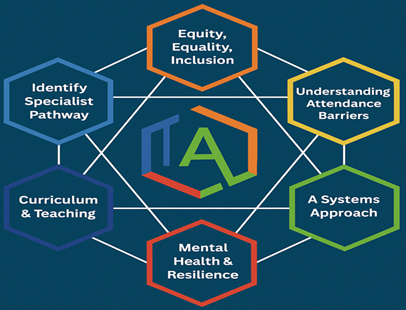
Inclusive Attendance Implementation Programme
Each year, Windmill Academy reviews and further enhances attendance practices through dedicated participation in the Inclusive Attendance 7-month implementation programme. This investment allows us to remain at the forefront of educational change and extends unparalleled support to our children and their families, equipping them with access to the finest possible support.
Impact and Collaboration
Through our ongoing year-long implementation programme, and five year long-term strategy, we deliver measurable impact by creating an inclusive attendance culture and improving outcomes for all children and young people. We are outward-facing in our approach and value working regionally and nationally, through a systems-led model with other schools and external agencies. We continually strengthen and enhance our offer year on year. This work is underpinned by ongoing accredited CPD for staff each year, ensuring sustainable change, stronger outcomes for children and young people, and a deeply embedded culture of collective responsibility.
Multi-Tiered System of Support
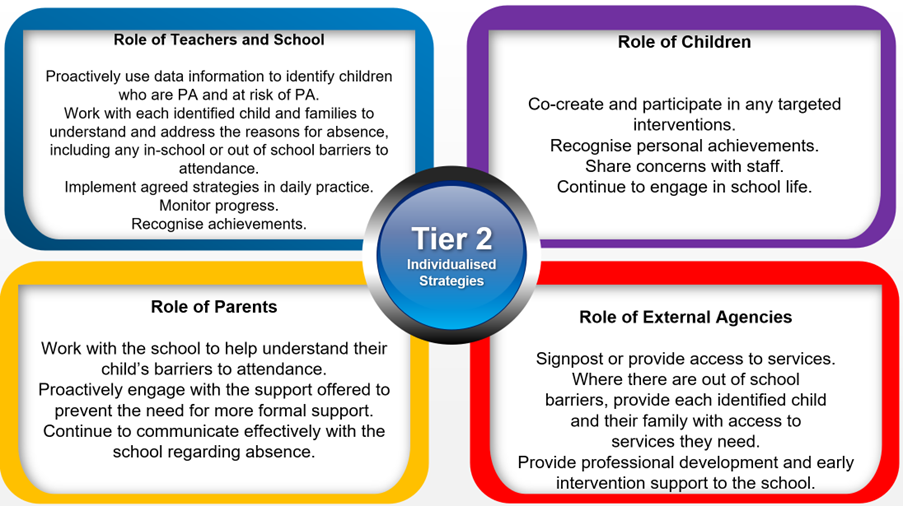
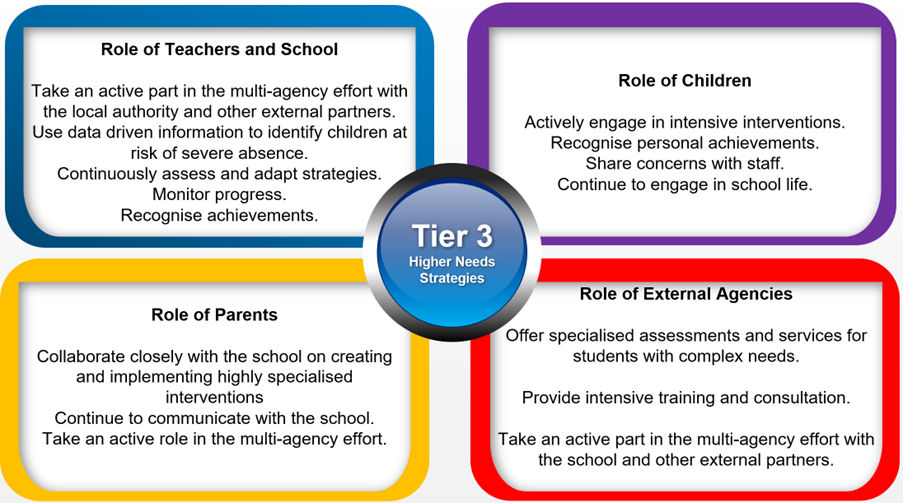
To guarantee a comprehensive approach to attendance, we implement a Multi-Tiered System of Support. A Multi-Tiered System of Support (MTSS) for school attendance involves three tiers of intervention, with roles for teachers, the school, children, parents, and external agencies – including the Local Authority. Data-driven decision-making and training requirements are pivotal to the implementation of the system. The system aligns with the Department for Education’s (DFE) “Working Together to Improve School Attendance” guidelines.
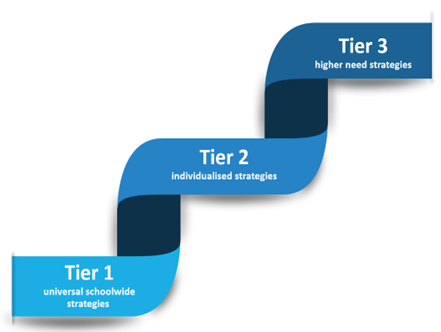
Tier 1 – Universal Approach: Establishing a baseline universal attendance approach that benefits all children. 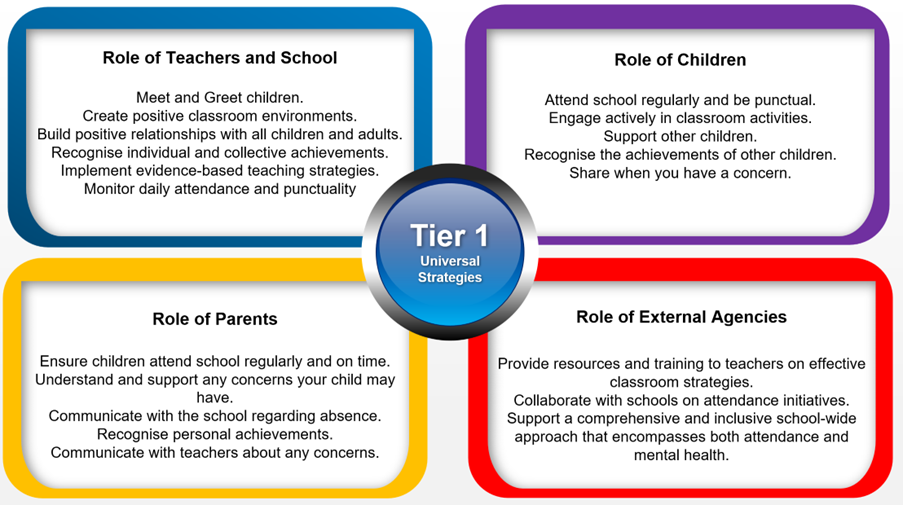
Tier 2 – Individualised Strategies and Early Help Support: Tailoring strategies to individual needs and providing early help support for persistent attendance challenges.
Tier 3 – Higher Needs Strategies Support: Furnishing specialised support for children, young people, and families with complex attendance requirements, including access to external agency support when necessary.
Recognition-Based Approach
Our attendance philosophy is rooted in a recognition-based approach that recognises both personal and collective achievements. This approach serves to thwart isolation, prevent victimisation, cultivate positive environments, nurture relationships, foster inclusivity, and ultimately cultivate intrinsic motivation among our children, families, and staff.
Personalised Recognition
Pupils are acknowledged for effort and improvement, not just outcomes (e.g., 100% attendance).
Staff are trained to understand the context behind attendance barriers, and to celebrate personal progress meaningfully and sensitively.
Language used is affirming and relationship-focused (e.g., “We’ve really missed you – it’s great to have you back,” rather than “You’ve missed too many days”).
Collective Celebrations
Whole-class or group-based attendance awards help build team identity and connection.
Group achievements are framed around shared effort and support, rather than competition.
Regular Feedback and Reflection
Pupils are given opportunities to reflect on their attendance journey with trusted adults.
Success is shared in 1:1 conversations or small groups, depending on what feels emotionally safe for the child.
Inclusive Communication with Families
Recognition is extended to families through postcards, texts, and face-to-face praise.
Communication is framed positively and supportively, particularly where attendance has been a challenge.
Family circumstances and cultural differences are respected when choosing recognition methods.
Celebratory Events (Opt-In)
End-of-term or half-term events (e.g. HERO parties) are offered as inclusive, optional celebrations.
The Importance of School Attendance
School attendance is not merely a requirement but a fundamental pillar of education. It plays a pivotal role in shaping academic success, personal growth, and future prospects, making it an indispensable aspect of any educational system.
Academic Achievement: Regular attendance directly correlates with academic success. Children who attend school consistently are more likely to keep up with the curriculum, perform better in exams, and improve their life outcomes.
Social Development: School provides a vital social environment for children and adolescents to interact with peers, develop friendships, and learn essential social skills. Consistent attendance ensures children remain connected to their peer group.
Building Routine: School attendance establishes a structured routine in children’s lives, teaching them time management and responsibility, which are valuable life skills.
Preventing Knowledge Gaps: Frequent absences can lead to significant knowledge gaps, making it challenging for children to catch up with missed lessons, potentially resulting in long-term academic struggles.
Legal and Parental Responsibility: Parents or guardians are legally responsible for ensuring their child’s regular school attendance. Failing to do so can lead to legal consequences.
Community Well-being: High levels of school attendance contribute to the overall well-being of communities.

Attendance, Safeguarding & Medical Officer
At Windmill Academy, we are committed to a child-centred and inclusive approach to attendance. Our Attendance, Safeguarding & Medical Officer, Melanie Jago, plays a vital role in supporting children and families to overcome barriers and promote regular school attendance.
Melanie works closely with parents, carers, and staff to ensure every child can attend, connect, and thrive. Her role involves early intervention, practical support, and collaboration with external agencies where needed.
If you are concerned about your child’s attendance, or would like support, Melanie can arrange:
Together, you will develop an Attendance Improvement Plan tailored to your child’s needs. This plan is designed to identify and address any challenges affecting attendance, with strategies that are supportive, evidence-informed, and focused on long-term progress.
This work aligns with our commitment to the Department for Education’s Working Together to Improve School Attendance guidance.
Melanie Jago can be contacted directly by:
Please feel welcome to reach out for advice, to raise a concern, or to discuss how we can support your child’s attendance.
While we understand that some absences are unavoidable, school attendance is a legal requirement and a critical part of every child’s education. Our approach is rooted in partnership, not punishment, and we are here to help address any barriers before they become more serious.
We work proactively with families, and when necessary, we will also involve the Local Authority and the Education Welfare Service as part of a multi-tiered approach to support.
You may also find these services helpful: